Wedding website with password: when to use it and what to protect

Skip ahead
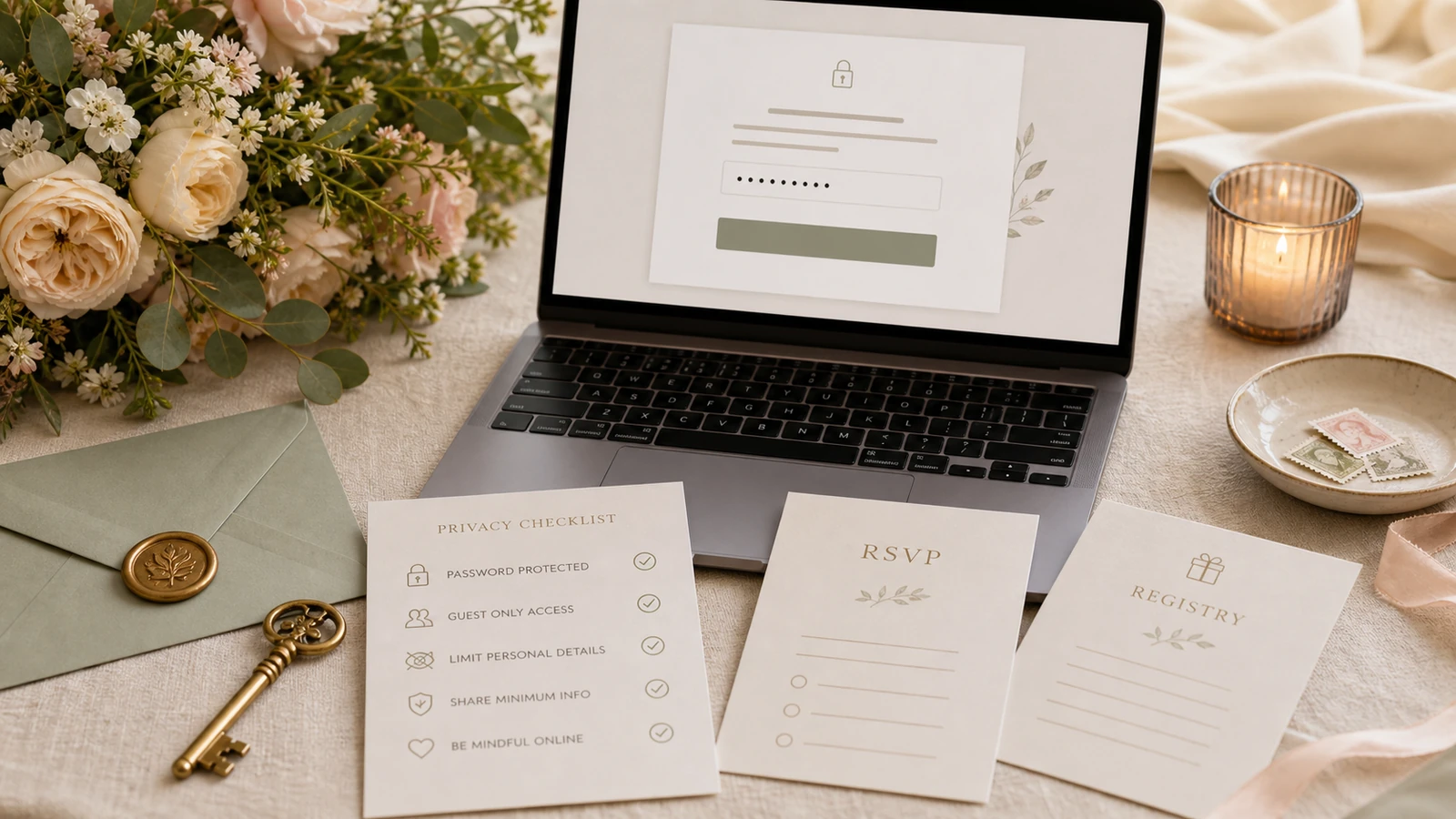
Using a password on your wedding website makes sense when you want to share useful information without leaving it open to anyone who finds the link. At a wedding in Spain it is often especially practical if you are going to publish detailed schedules, private addresses, confirmation questions or travel notes that only interest real guests.
The password does not replace editorial judgment: the important thing is to decide what can be open, what should be reserved for guests and how to explain it without making the experience uncomfortable. If you do it right, you reduce repeated messages, better protect sensitive details, and maintain a tidier website.
When it is really convenient to set a password
Not all wedding websites need to be shut down completely. If your page only shows a welcome, the date, the city and a general note, many couples prefer to leave that part open. The password begins to add value when the content includes fine logistics: a family house where there will be a pre-wedding, transfer codes, a hotel with space, staggered schedules or a group confirmation with personal questions.
It's also useful when you have guests who don't know each other and you don't want to expose names, family relationships, or sensitive decisions like an adults-only wedding. In that scenario, a simple barrier reduces the risk of information circulating outside the intended group and gives you room to update details without feeling like everything is published to anyone.
If you are still defining what should go in the visible part and what should be moved to a more private area, it helps to review first what to include in a wedding website and separate inspirational information from operational information.
What to leave public and what to protect
A rule of thumb is to leave open what helps the guest recognize the wedding and decide if they have arrived at the right place, and protect what connects to specific people, movements or too precise data. There's no need to hide everything: the simpler the access, the better the guest experience.
- It can be public: names of the couple, date, city, a brief welcome and an editorial photo without personal data.
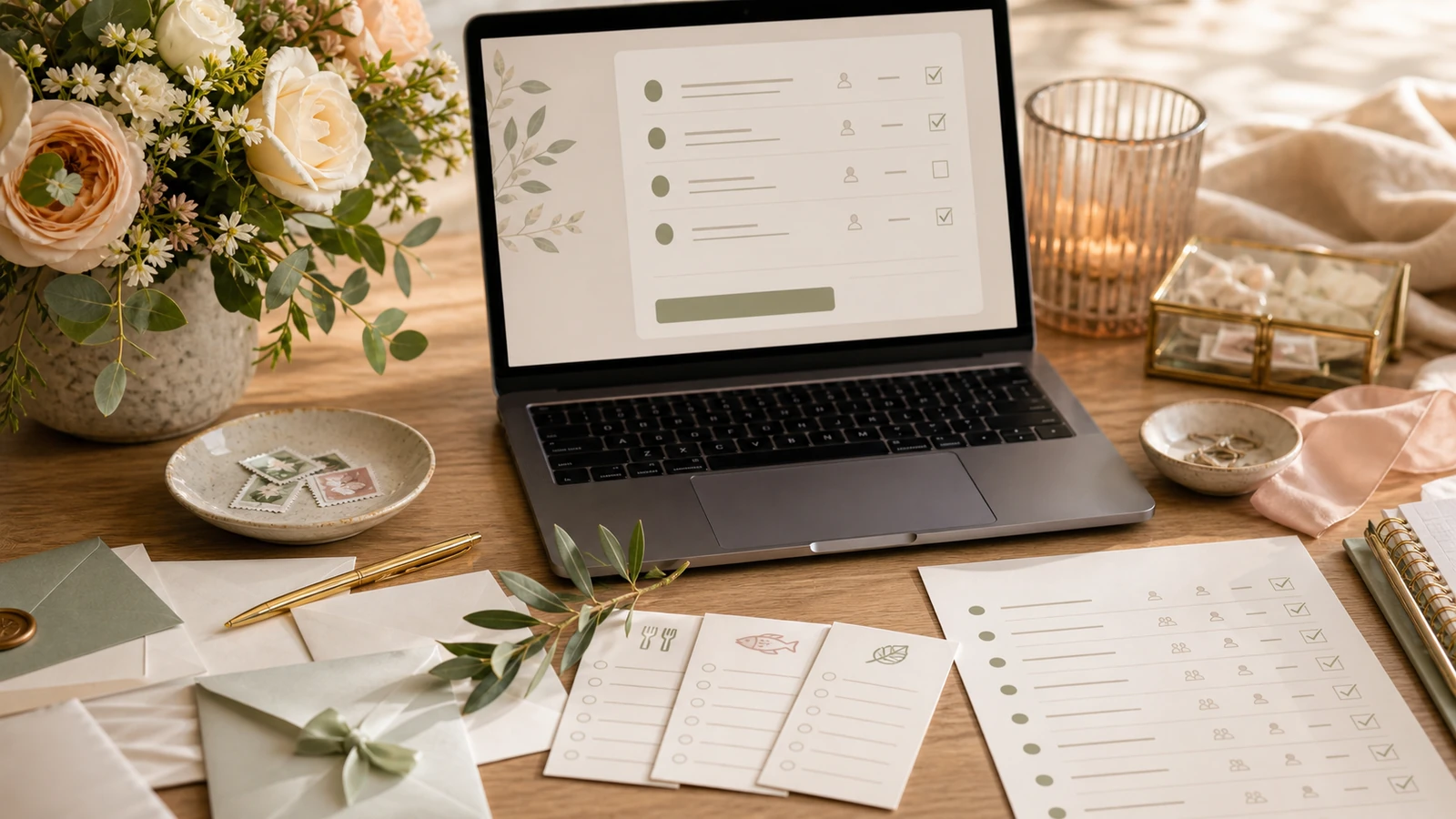
- It is advisable to protect: confirmation forms, full names of guests, menus and allergies, children, companions and responses per event.
- It is advisable to protect: private addresses, pick-up times, buses, meeting points and notes that change at the last minute.
- It is better to never publish as visible text: account numbers, improvised payment instructions, documents with personal data or screenshots with private information.
Topics
- Wedding website
- Privacidad
- RSVP
Planning RSVP, registry gifts, and guest details together?
bodaya brings wedding websites, RSVP, guest lists, registry contributions, and thank-you follow-up into one connected planning experience.
Start planning